
Alicates

Ferramenta de crimpagem profissional para terminais de tubo - Garras de liga de aço S2 para serviços pesados, cabo ergonômico, crimpador preciso para conectores de fio de 6-6 mm

Kit profissional de crimpagem de conectores solares MC4 para cabos de 2,5/4/6 mm² – lâminas de aço de alto carbono, cabo ergonômico, durável e preciso

Alicate de corte profissional multifuncional - lâmina de aço carbono, durável e compacto para eletricistas e entusiastas do faça você mesmo

Alicate de corte e decapagem de fios multifuncional 8 em 1 de aço inoxidável com testador de voltagem - Alicate de eletricista para decapagem, crimpagem e corte de cabos

Alicate de crimpagem de cabo ajustável, alicate de decapagem automático multifuncional, ferramenta manual para terminais
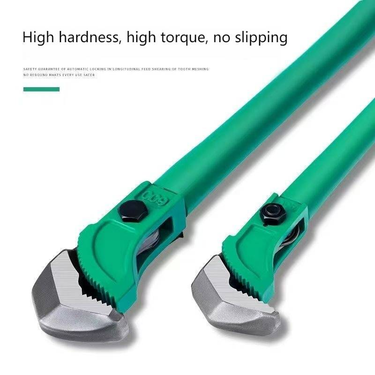
Chave de torque para serviço pesado para vergalhões e tubos - Construção em aço cromo vanádio - Opções de comprimento de 450 mm/600 mm - Ideal para estruturas de aço e trabalhos em pontes

Alicate de retenção combinado Circlip resistente e fácil de transportar Alicate de anel de pressão Conjunto de ferramentas leves e multifuncionais

Cortadores de fio de aço inoxidável profissionais para eletrônicos, modelagem e artesanato - Cortadores de fio diagonais de precisão com lâminas de aço níquel-cromo

Alicate de decapagem automático profissional - Ferramenta elétrica multifuncional com lâminas de liga de zinco para decapagem e corte precisos de fios

Alicate de corte e crimpagem profissional para fios automotivos - Alicate elétrico multifuncional 3 em 1 com lâminas de aço manganês de alta dureza

Alicate de braçadeira de mangueira Kit de remoção de carro Fio de longo alcance Mola Alicate de braçadeira de mangueira Faixa de aquecedor de radiador de refrigerante automático Grampo plano ou grande

Alicate de perfuração profissional para instalação de pinos de aço em drywall e teto - Lâmina de liga S2 para serviço pesado, cabo ergonômico

Alicate de bico fino mini de 5 polegadas, cortador de fio multiuso com mandíbula curva e plana para trabalhos de precisão, aço de alto carbono de nível industrial

Alicate cortador de fios multifuncional profissional com lâminas de aço carbono, design ergonômico para eletricistas e profissionais de bricolage (cabeça de 100 mm)

Alicate de decapagem de fios multifuncional profissional, cortador e crimpador - Alicate de decapagem de precisão em liga de aço S2 de grau industrial para eletricistas e profissionais de bricolage

Cortador de cabo profissional de 6 polegadas - Ferramenta de corte de fio de aço CRV para serviço pesado para uso industrial e faça você mesmo

Alicate de anel de retenção de 5 pol., alicate de ponta fina, alicate de anel de retenção, para remoção, instalação de anéis de travamento de extrator, eixos

Ferramenta profissional para furar pulseiras de couro - Lâmina de aço carbono, furador de precisão para cintos, etiquetas e chapas finas de metal

1 conjunto de alicates de ilhós de 1/4 de polegada, kit de alicates de perfuração de ilhós com 100 ilhós de metal, kit de ferramentas de ilhós para tecido de couro

Alicate de corte de fio de liga multifuncional para serviços pesados, alicate de ponta fina diagonal, ferramentas de hardware, conjunto universal de alicates de fio de eletricista
Pliers: The Tool You Grab When Things Shouldn’t Move
You usually don’t plan to use pliers. You reach for them when something slips, twists, won’t hold, or can’t be turned by hand. That might be a wire that needs bending, a clip that needs removing, or a part that must stay still while you work on it.
Pliers are not about speed or power. They are about control—especially in situations where fingers are not enough and wrenches are too blunt.
Typical Problems That Call for Pliers
Most users pick up pliers when dealing with one of these situations:
- A small part needs to be held firmly without rotating
- A wire needs to be bent, twisted, or pulled into position
- A clip or ring needs to be removed without damaging nearby parts
- A component must stay aligned while another tool is used
If your first thought is “this keeps slipping” or “I need a better grip,” pliers are usually the right category.
Snap Ring Pliers: When Removal Needs Control, Not Force
Retaining rings are designed to hold components in place under stress. Removing them incorrectly often leads to warped rings, scratched housings, or lost parts.
Snap ring pliers are made specifically for installing and removing these rings by expanding or compressing them evenly. Using regular pliers here is a common mistake—it increases the chance of slipping and damaging the ring or the surrounding assembly.
You typically use snap ring pliers in mechanical repairs, gear systems, or any assembly where components are secured internally rather than with fasteners.
Slip Joint Pliers: Flexible, but Not for Everything
Slip joint pliers are often the first pliers people own because they adjust to different sizes. They’re useful for gripping, holding, or turning objects when exact sizing isn’t critical.
They work well for light-duty tasks, quick fixes, and irregular shapes. However, they are not ideal for high torque or precision work. Overusing slip joint pliers for tasks they’re not suited for often leads to rounded edges or hand fatigue.
Think of them as a general helper, not a solution for every problem.
Lineman Pliers: Built for Repeated Stress
If your work involves thicker wire, tougher materials, or repeated twisting and cutting, lineman pliers are the tool designed for that load.
They are heavier and more robust than general-purpose pliers, with jaws designed to grip firmly and cut cleanly. These are commonly used in electrical work, construction, and maintenance tasks where durability matters more than compact size.
When force and reliability matter, lineman pliers are usually the safer choice.
Using Pliers Alongside Other Tools
Pliers rarely work alone. They often support other tools rather than replace them. For example, you might hold a part steady with pliers while checking alignment or dimensions with measuring tools before making adjustments.
They are also part of a broader hand tools category, which includes knives, screwdrivers, wrenches, and chisels. Each of these tools handles force differently: cutting, turning, striking, or holding. Pliers fill the “holding and controlling” role within that system.
Understanding this role helps avoid misusing tools for tasks they weren’t designed for.
Common Mistakes Users Make with Pliers
A few patterns show up again and again:
- Using adjustable pliers when a fixed or specialized design is needed
- Applying excessive force instead of choosing the right jaw shape
- Using pliers as a substitute for a wrench or cutter
These mistakes don’t usually cause immediate failure, but they do lead to damaged parts and unnecessary strain.
Storage and Access Matter More Than You Think
Because pliers are used reactively, access matters. If they’re buried at the bottom of a box, users often grab the wrong tool instead.
Using tool organizers helps keep different types of pliers visible and accessible, reducing misuse and saving time during tasks. This is especially important in shared or multi-tool environments.
Choosing Pliers Based on Use, Not Labels
The most useful way to choose pliers is not by name, but by task. Pliers are simple tools, but using the right type makes work smoother, safer, and more predictable.